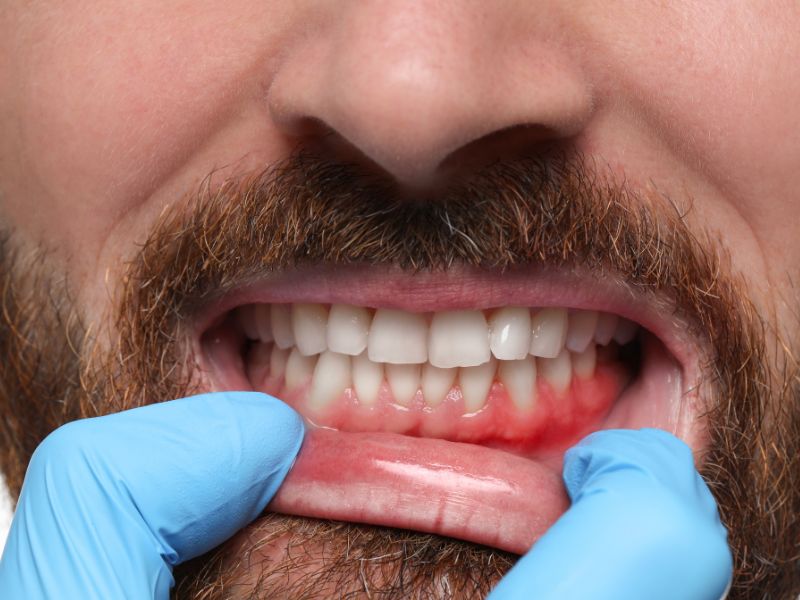
Most people assume bad breath is caused by something they ate or simply not brushing well enough. While that can be true in some cases, persistent bad breath may signal something more serious, including gum disease.
If brushing, flossing, and mouthwash aren’t solving the problem, your mouth could be trying to tell you it needs professional attention.
The Link Between Bad Breath and Gum Disease
Gum disease begins when plaque builds up along the gumline. This sticky layer of bacteria feeds on food particles and produces unpleasant-smelling compounds. When plaque isn’t removed properly, it hardens into tartar and irritates the gums.
In the early stage, called gingivitis, symptoms may include:
- Red or swollen gums
- Bleeding when brushing or flossing
- Tender gum tissue
- Persistent bad breath
As gum disease progresses into periodontitis, the infection moves deeper below the gumline. Bacteria begin breaking down tissue and bone, creating pockets where even more bacteria collect — which can make breath odor worse.
Bad breath caused by gum disease doesn’t usually go away with mints or rinses because the source is below the surface.
Why Gum Disease Affects Breath
The bacteria involved in gum disease release sulfur compounds. These compounds create a strong odor that many patients describe as metallic or unpleasant.
The more advanced the gum infection becomes, the more bacteria accumulate — and the stronger the odor may be.
That’s why chronic bad breath is often one of the earliest warning signs of developing gum problems.
When Should You See a Dentist?
If you notice ongoing bad breath along with bleeding gums or gum sensitivity, it’s time to book an exam. A professional cleaning can remove tartar buildup that brushing alone cannot fix.
At your appointment, a North Vancouver dentist can:
- Measure gum pocket depth
- Check for inflammation or bone loss
- Recommend deep cleaning (scaling and root planing) if needed
- Create a treatment plan to stop the infection
Early treatment makes a big difference. Gingivitis is reversible, but advanced gum disease requires more extensive care.
Long-Term Effects of Untreated Gum Disease
Ignoring gum disease doesn’t just affect breath. Over time, it can lead to:
- Receding gums
- Loose teeth
- Tooth loss
- The need for tooth replacement solutions such as dental implants in Vancouver BC
In severe cases, untreated gum infections can even affect overall health, as oral bacteria may enter the bloodstream.
The Good News
The good news is that gum disease is preventable and manageable with proper care. Regular dental checkups, professional cleanings, and consistent brushing and flossing reduce your risk significantly.
If you’re experiencing persistent bad breath, don’t ignore it. It may be more than a hygiene issue — it could be your gums asking for attention.
Book an appointment with our Vancouver dental team to find out what’s causing your symptoms and get back to feeling confident in your smile.
About the Author